The pooja room holds a sacred, emotionally profound position in South Indian homes. In Mysuru residences across Vijayanagar, Kuvempunagar, Gokulam, Jayalakshmipuram, Saraswathipuram, and Hebbal, designing a pooja room interior design requires a delicate balance between traditional spiritual reverence, authentic Vastu Shastra principles, natural materials, and modern architectural aesthetics. Whether you have a dedicated room or a compact wall-mounted mandir, your pooja space should foster a serene, meditative environment while organizing brass lamps, incense, oil containers, and sacred texts.
At L Square Constructions & Interiors, we specialize in crafting custom pooja rooms and temple units using solid Burma teakwood, CNC-cut brass and wooden jaali screens, backlit translucent onyx marble, and concealed drawer storage. Whether you are outfitting a luxury villa in Jayalakshmipuram or integrating a compact mandir into a 2BHK apartment, this master guide explores pooja room interior design in 2026—covering traditional vs. modern styles, Vastu guidelines, material selection, lighting layers, and itemized cost breakdowns.
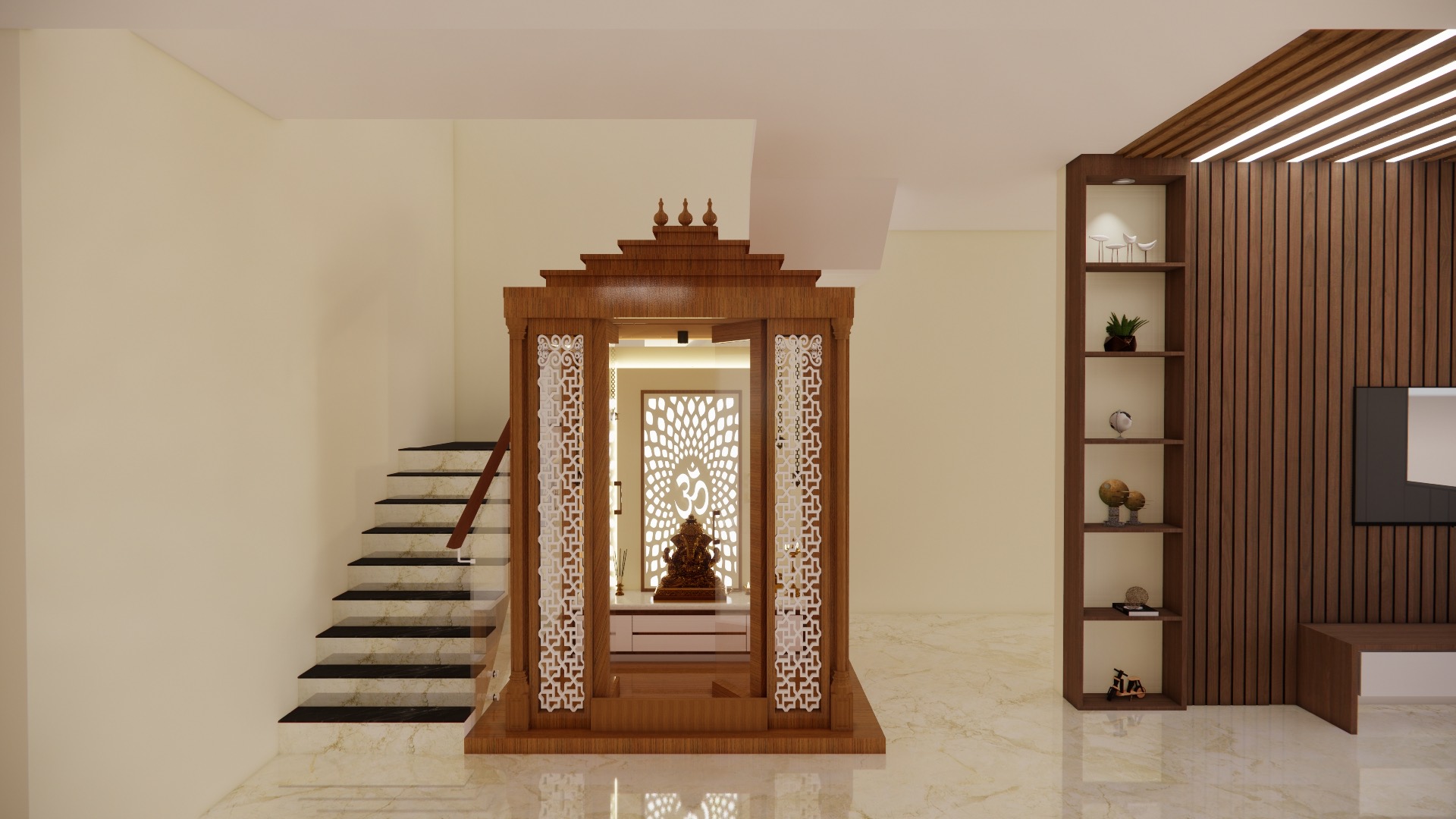
The Cultural Significance of Pooja Spaces in Mysuru Homes
Mysuru, known as the cultural capital of Karnataka, has a rich heritage of temple architecture, intricate wood carvings, and spiritual traditions. Homeowners designing a pooja room interior design in Mysuru expect craftsmanship that honors this heritage while integrating seamlessly into contemporary living environments.
The 4 Core Principles of Modern Pooja Room Design:
- Authentic Vastu Alignment: Positioning the pooja space, deity platform, and idol orientations according to traditional Vastu Shastra for positive energy flow.
- Noble & Durable Materials: Using solid teakwood, genuine brass inlays, natural marble, and quartz that withstand daily incense smoke, oil splatters, and camphor heat.
- Layered Ambient Lighting: Combining soft 3000K warm LED profile lighting, backlit onyx marble backdrops, and bell spotlights to create a peaceful, meditative sanctuary.
- Concealed Storage Organization: Engineering hidden base drawers and pull-out prasadam trays so brass lamps, wick oils, matchboxes, and prayer books remain neatly stored.
By managing the design consultation, 3D visualization, factory manufacturing, stone cutting, electrical wiring, and installation under a single contract, L Square crafts pooja spaces built to last generations. You can view our completed pooja rooms in our portfolio of completed Mysuru projects.
1. Traditional vs. Contemporary Pooja Room Styles
Depending on your home floor plan and personal preferences, our senior design engineers categorize pooja spaces into four distinct architectural formats:
A. Dedicated Traditional Teakwood Pooja Rooms
Common in spacious independent houses and villas in Gokulam, Jayalakshmipuram, and Kuvempunagar.
- Teakwood Carvings: Handcrafted Burma teakwood door frames, carved pillars (pillars inspired by South Indian temple architecture), and bell-integrated wooden doors.
- Marble Flooring & Steps: White Makrana or Italian marble flooring with elevated two-tier step platforms for idols.
- Brass & Copper Accents: Hand-hammered brass jaali inserts, brass door handles, and inlaid lotus motifs.
B. Contemporary Backlit Onyx & CNC Jaali Mandirs
Ideal for modern luxury apartments and contemporary villas where clean lines are preferred.
- Translucent Onyx Backdrop: Backlit natural onyx stone or quartz slabs that emit a warm, golden halo behind the idols when illuminated.
- Laser-Cut CNC Screens: Precision laser-cut wooden or brass jaali partition screens featuring Om, Gayatri Mantra, or lotus geometric patterns.
- Floating Base Cabinets: Cantilevered HDMR drawers finished in PU paint or acrylic with integrated brass pull-out prasadam trays.
C. Compact Living / Dining Niche Mandirs
Designed for 2BHK and 3BHK apartments where a separate room is unavailable.
- Recessed Wall Niches: Transforming a living room or dining alcove into a recessed pooja niche with folding jaali doors.
- Glass-Partitions: Tinted toughened glass side panels that visually demarcate the sacred zone while allowing light flow.
D. Wall-Mounted Modular Pooja Cabinets
Compact, space-saving wall-hung mandir units for small apartments or rental properties.
- Concealed Drawers: Base drawer units with soft-close channels for daily pooja items.
- Ambient Backlighting: Integrated LED strip lighting illuminating acrylic Ganesha or Om motifs.
2. Comprehensive Vastu Shastra Guidelines for Pooja Rooms
Vastu alignment is a fundamental consideration for Mysuru families when designing a pooja space. Below are authentic Vastu Shastra guidelines compiled by our design team:
SOUTH
- ✓ Suitability: NORTH-EAST
- ✓ Suitability: (ESHANYA ZONE)
- ✓ Suitability: SOUTH-EAST
- ✓ Suitability: (Agni Zone)
Essential Pooja Room Vastu Rules:
- Ideal Direction (Location): The pooja room should ideally be located in the North-East (Eshanya) corner of the house. Alternatively, North or East directions are highly favorable.
- Idol & Deity Orientation: Place idols on an elevated platform along the East or West wall so that the worshipper faces East or North while praying.
- Avoid Facing South: Neither the idols nor the worshipper should face South during prayer.
- Ideal Floor Level: The deity platform should be elevated at least 6 to 12 inches above the finished floor level. Never place idols directly on the floor.
- Prohibited Placements: Never locate a pooja room directly under a staircase, inside a master bedroom, or sharing a common wall with a bathroom/toilet.
- Door Design: A pooja room should ideally feature a two-door entryway opening inward, crafted from high-quality wood like teak.
- Color Palette: Choose serene, pure colors such as white, off-white, light yellow, warm cream, or soft gold. Avoid dark black or deep red wall colors.
3. Key Materials for Long-Term Durability & Maintenance
Pooja spaces are exposed daily to oil splatters from brass diyas, heat from camphor, and smoke from incense sticks (agarbatti). Material selection must prioritize fire resistance, stain cleanability, and thermal durability.
Material Selection Matrix for Mysuru Pooja Rooms:
| Component | Recommended Material | Why It Is Selected |
|---|---|---|
| Door Framing & Pillars | Solid Burma Teakwood | Natural oil content; highly resistant to warping, termites, and age |
| Jaali Partition Screens | CNC Brass Sheet / Teakwood | Laser-cut precision; brass retains timeless luster with simple polishing |
| Deity Backwall Panel | Backlit Onyx / Quartz Slab | Translucent stone diffuses LED light evenly; 100% heat & stain proof |
| Base Drawer Cabinets | BWP IS:710 Marine Plywood | 100% Boiling Water Proof; immune to oil spills and floor washing moisture |
| Countertop Platform | Italian White Marble / Quartz | Heat-resistant against brass lamps; smooth, easy to wipe clean |
Maintenance & Soot Prevention Tips:
- Stain-Proof Backlit Quartz & Onyx: Unlike painted drywall which absorbs oil vapors, smooth backlit onyx and quartz panels can be wiped clean with warm water and mild soap.
- Concealed Brass Prasadam Pull-Out Tray: Integrating a brass-clad pull-out tray directly under the main platform provides a dedicated surface for camphor and diya burning, protecting wood finishes from heat.
- Exhaust / Ventilation Slots: Integrating subtle ventilation louvers inside the pooja ceiling prevents incense smoke buildup.
Read our overall home interior design cost guide for Mysuru for broader material insights.
4. Door Styles & Entrance Thresholds for Pooja Rooms
The entrance threshold of a pooja room marks the transition from daily residential activity into a sacred space:
- Two-Door Teakwood Frames: Classic double doors crafted with CNC brass lattice inserts and small hanging brass bells that chime gently upon opening.
- Folding CNC Jaali Accordion Doors: Space-saving bi-fold doors suited for living room alcoves where outward door swing space is restricted.
- Frameless Glass Doors with Etched Om / Lotus Motifs: Modern toughened glass doors with frost-etched sacred icons, providing a clean contemporary look.
5. Architectural Lighting Design for Pooja Rooms
Lighting creates the emotional atmosphere of a pooja space, transforming it into a peaceful, meditative refuge:
- Backlit Onyx / Stone Diffusion: 12V / 24V warm 3000K LED modules placed behind translucent onyx or quartz slabs create a glowing backdrop behind the idols.
- Deity Spotlight Illumination: Low-glare 2W / 3W narrow-beam LED spotlights mounted on the ceiling direct focused beams onto individual brass idols or deity frames.
- Base Step Profile Lighting: Concealed LED profile strips beneath the deity platform steps illuminate the floor softly without visual glare.
- Brass Bell Pendant Spotlights: Small hanging brass pendant lamps with warm filament bulbs anchor the entrance doorway.
Explore false ceiling options in our false ceiling design guide for Mysuru.
Sacred Geometry & Sacred Iconography in CNC Jaali Design
In contemporary Mysuru pooja rooms, CNC laser-cut jaali screens serve as both visual dividers and sacred artistic statements:
- The Sacred Om Motif: Laser-etched Om symbols surrounded by radial sunburst cuts transmit soothing warm light when backlit.
- The Lotus (Padma) Lattice: Symbolizes spiritual purity and divine detachment. Lotus jaalis create delicate shadow patterns across marble floors.
- The Kalash & Tree of Life: Traditional motifs cut in solid teakwood or sheet brass representing prosperity, family roots, and divine blessing.
- Gayatri Mantra CNC Engravings: Precision brass plate wall panels engraved with Sanskrit hymns illuminated by LED profile lights.
Pooja Room Flooring & Step Elevation Ergonomics
Flooring material and step elevation in a pooja room determine both cleanliness and worshipper seating comfort:
- Elevated Step Platforms: Build 2-tier or 3-tier step platforms for idols elevated at 6 inches and 12 inches above the main floor level. Step surfaces should be clad in smooth Italian white marble or quartz for heat resistance against brass oil lamps.
- Flooring Material Selection: White Makrana marble, Italian statuario marble, or light-colored unpolished vitrified tiles are ideal flooring choices. Avoid dark black granite or cold steel tiles inside the sacred zone.
- Recessed Foot Mat Niche: Engineer a recessed 12mm floor niche at the pooja entrance for a woven brass-trimmed door mat, preventing dust from entering the pristine marble room.
- Dedicated Brass Lamp & Wick Trays: Pull-out stainless steel SS304 trays lined with removable brass inserts protect wooden drawer interiors from oil drippings and lamp heat.
Estimated Pooja Room Interior Cost in Mysuru (2026 Pricing Tiers)
Pooja room costs depend on size (compact niche vs. dedicated room), teakwood volume, CNC brass jaali complexity, and backlit onyx marble selection. Below is an itemized breakdown of budget expectations for Mysuru homes:
| Pooja Room Format | Essential Tier (Commercial Ply + Laminate + Wooden Jaali) | Standard Tier (BWR Ply + Teak Finish + CNC Jaali + LED) | Luxury Tier (Solid Teakwood + Brass Jaali + Backlit Onyx) |
|---|---|---|---|
| Compact Wall Mandir (3ft) | ₹22,000 – ₹32,000 | ₹35,000 – ₹52,000 | ₹68,000 – ₹1,10,000+ |
| Living Niche Unit (5ft) | ₹42,000 – ₹58,000 | ₹65,000 – ₹92,000 | ₹1,20,000 – ₹1,85,000+ |
| Dedicated Room (6ft x 6ft) | ₹75,000 – ₹1,05,000 | ₹1,25,000 – ₹1,80,000 | ₹2,40,000 – ₹4.20 Lakh+ |
For overall home budgeting, explore our 2BHK interior design cost guide and 3BHK interior design cost guide.
Step-by-Step Execution Process for Pooja Room Projects
To ensure a respectful, beautifully executed pooja space, L Square follows a structured 5-step turnkey workflow:
Turnkey Execution Roadmap
On-Site Vastu Consultation & 3D Laser Measurement
Photorealistic 3D Design & Material Selection (Niveditha Nagar Studio)
Itemized Line-Item Proposal & Contract Sign-Off
Precision Factory Manufacturing & Stone Cutting (Mysuru Plant)
On-Site Assembly, Brass Fitting & 45-Day Handover
- Vastu & Laser Measurement: Our senior interior designers visit your Mysuru home to perform laser measurements, analyze room orientation, and verify Vastu North-East alignment.
- 3D Design & Material Selection: We develop photorealistic 3D renders showing exact teakwood carvings, jaali patterns, and backlit stone panels. You visit our Niveditha Nagar studio to inspect physical samples of teakwood, brass sheets, onyx slabs, and marble.
- Transparent Line-Item Proposal: We provide an itemized quote detailing every cubic foot of teakwood, square foot of onyx marble, brass fittings, and electrical points. Once signed, the price remains fixed.
- Factory Precision Manufacturing: Teakwood doors, CNC jaalis, and BWP marine ply base drawers are precision-machined in our Mysuru facility using CNC routers.
- On-Site Installation: Finished modular components and stone slabs are assembled on site within 2 to 4 days, with our team completing electrical wiring, spotlight fitting, and final cleanup within our 45-day turnkey timeline.
Why Mysuru Homeowners Choose L Square Interiors
Homeowners across Mysuru select L Square for our deep cultural understanding, craftsmanship quality, and material integrity:
- Genuine Solid Burma Teakwood: We source 100% genuine seasoned teakwood with verified wood density and zero filler materials.
- Factory CNC Precision: All jaali screens and brass inlays are laser-cut with 0.1mm accuracy for flawless geometric symmetry.
- 10-Year Plywood Warranty: Certified IS:710 BWP marine plywood base cabinets backed by an official 10-year warranty against water and termites.
- Turnkey Civil Capabilities: We manage marble flooring, electrical rewiring, ceiling lighting, stone polishing, and custom woodwork under one contract.
Start Your Pooja Room Transformation Today
Craft a sacred, serene pooja space tailored to your home's architecture and spiritual traditions. Contact our senior design team today:
- 💬 WhatsApp Direct: Chat directly with L Square designers on WhatsApp
- 📸 Instagram Gallery: Follow L Square on Instagram for live pooja room photos
- 🌐 Services Overview: Explore our full range of L Square Interior Services
- 📍 Book Studio Consultation: Visit our L Square Mysuru Studio Contact Page or call +91 70225 63050.
Frequently Asked Questions (FAQ)
Which direction should a pooja room face according to Vastu in Mysuru?
The pooja room should ideally be situated in the North-East (Eshanya) corner of your home. Idols should be positioned on the East or West wall so that you face East or North while praying.
How do you clean soot and oil stains from a pooja room backdrop?
Using translucent onyx stone, quartz slabs, or acrylic-finished backdrops allows oil splatters and incense soot to be wiped away effortlessly with a damp microfiber cloth and warm soapy water, unlike painted drywall which absorbs oil stains.
How much does a custom teakwood pooja room cost in Mysuru?
A custom teakwood pooja mandir unit in Mysuru ranges from ₹35,000 to ₹52,000 for a Standard compact unit with CNC jaali screens, and from ₹1,25,000 to ₹4.20 Lakh+ for a dedicated solid teakwood room with backlit onyx stone backdrops and brass inlay doors.